
How to Evaluate a Topical DMSO Roller Without Taking the Label at Face Value
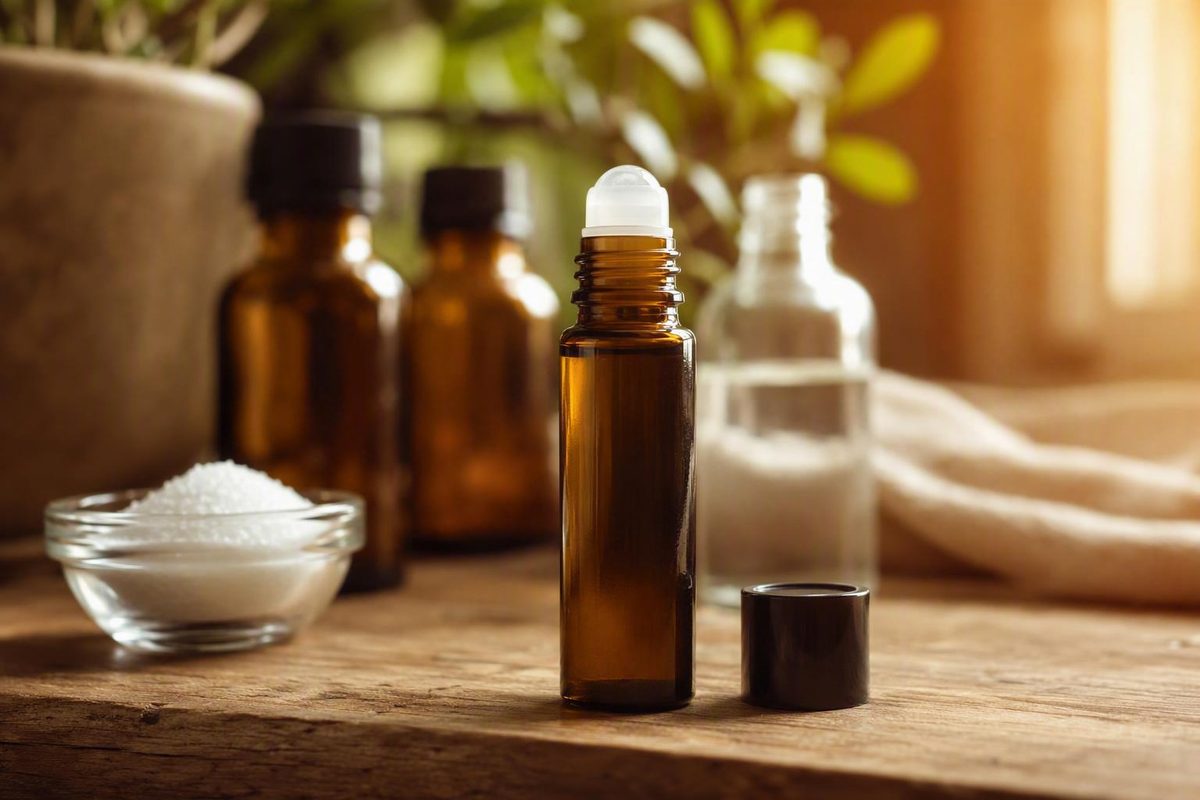
A DMSO roll-on may resemble an ordinary topical product, but the roller ball is only a delivery mechanism. It does not answer the questions that matter most: What concentration is in the finished formula? What else is in the bottle? Has the relevant batch been tested for contaminants? Is the product intended for people, animals, laboratory work, or industrial solvent use? And is there credible evidence behind its pain-relief claims?
Listings for visually similar products may describe them as “pharmaceutical grade,” equine products, industrial solvents, veterinary aids, or human-facing pain-relief roll-ons. The practical conclusion is not that the highest concentration, cheapest bottle, or most popular listing is best. Formulation transparency, coherent intended-use labeling, lot-matched testing, clear warnings, and medication review are more useful criteria than testimonials or purity language.
Updated August 30, 2026. Product information in this article was compared with medically reviewed references and retailer pages. Retailer statements are treated as seller claims rather than independent evidence, and prices, ratings, stock, and label copy should be rechecked before publication or purchase.
What a DMSO roll-on is—and what the roller ball does not prove
DMSO stands for dimethyl sulfoxide. It is a solvent that readily penetrates skin and can increase the absorption of other substances at the application site. That behavior distinguishes it from an ordinary lotion or cosmetic gel and raises additional questions about contaminants, residues, and topical medicines, according to a medically reviewed overview of DMSO uses and risks.
A DMSO roll-on is simply a liquid or gel dispensed through a roller ball. The package is designed to place the formula on a relatively small area without pouring it or using a separate applicator. Commercial examples are commonly sold in three-ounce bottles, although package size does not establish an appropriate dose.
A roller can make a product more portable and facilitate localized placement. It does not demonstrate:
- that the formulation is suitable for human skin;
- that it relieves pain or inflammation;
- that each pass delivers a known or consistent dose;
- that the bottle is free of relevant contaminants;
- that the stated concentration or purity has been independently verified;
- that the package prevents overapplication or contamination; or
- that the product has regulatory approval for its promoted use.
Format and formulation must therefore be assessed separately. A bottle’s appearance cannot reveal the finished-product DMSO concentration, the assay of the DMSO raw material, the complete ingredient list, contaminant levels, manufacturing controls, or intended species.
The current market includes products described as non-diluted or approximately 99% DMSO, 70% DMSO with 30% distilled water, and 70% DMSO with 30% aloe vera. Sellers also advertise peppermint, lavender, rose, botanical, and other scented versions. Visually similar products are labeled industrial, equine, veterinary, laboratory, or solvent-only.
“DMSO roll-on” is consequently a product format, not a quality standard. Two three-ounce roller bottles can have different concentrations, ingredients, warnings, documentation, and intended users.
Bulk MSM evaluates these products as an educational publisher. It states that it does not sell supplements or operate an affiliate storefront, that no brand pays for placement, and that its content is not medical advice, as explained on its About page.
Pain-relief marketing versus the clinical evidence
There is an important distinction between an approved prescription use of DMSO and the proposed uses of retail topical rollers.
A specific prescription DMSO formulation is approved for bladder instillation in people with interstitial cystitis, also called painful bladder syndrome. That product-route-indication approval does not extend to over-the-counter topical roll-ons promoted for arthritis, muscle pain, joint pain, swelling, stiffness, or inflammation. A medically reviewed summary states that DMSO is not FDA-approved for pain relief and describes evidence for topical musculoskeletal and inflammatory uses as limited and inconsistent in its review of DMSO.
The supplied evidence therefore does not establish DMSO roll-ons as FDA-approved treatments for pain or inflammation. A separate medically reviewed reference reports that an analysis of DMSO for osteoarthritis found it was not significantly better than placebo for joint pain. The same reference says that studies have not established guidelines for determining an appropriate DMSO dose in its assessment of the evidence.
That evidence is considerably more restrained than retailer language. Commercial pages repeatedly invoke pain relief, arthritis, inflammation, swelling, stiffness, muscle recovery, and minor injuries. Those are seller claims, not findings established by the retailer pages. Repetition across several shops does not amount to independent corroboration when the shops use similar promotional language without controlled human evidence.
Customer reviews do not resolve the uncertainty. A favorable review cannot show that DMSO caused an improvement rather than the natural course of symptoms, another treatment, altered activity, expectation, or a placebo effect. Reviews also cannot identify a clinically appropriate concentration, establish long-term safety, or separate the effects of DMSO from those of inactive ingredients.
The Amazon listing illustrates both sides of anecdotal reporting. At capture, the three-ounce product cost $15.99 and displayed a 4.2-star rating from about 1,900 reviews. Amazon’s summary said customers often reported relief and liked the applicator, but it also identified burning and rashes as significant concerns on the marketplace listing.
Neither set of reports establishes causation. Positive experiences do not prove efficacy, while irritation reports do not establish incidence or predict who will react. Testimonials can highlight questions worth investigating, but they cannot replace controlled evidence.
Direct answer: A roller ball may be convenient, and some customers may report relief, but neither convenience nor favorable reviews closes the evidence gap for topical DMSO as a treatment for pain or inflammation.
Undiluted, 70/30, aloe, and scented formulas compared
Commercial DMSO rollers differ substantially even when their bottles look similar. The table below organizes common seller-listed formulations. “Unresolved information” identifies what cannot be determined from a listing alone.
| Listed DMSO percentage | Carrier or inactive ingredients | Physical form | Common listed size | Claimed grade | Seller positioning | Unresolved information |
|---|---|---|---|---|---|---|
| Non-diluted; approximately 99% to 99.995% | Often incompletely disclosed; some gel sellers identify carbomer | Liquid or gel | 3 oz | “Pharma grade,” “pharmaceutical grade,” “industrial grade,” or “laboratory tested,” depending on seller | Human-facing topical marketing, solvent use, equine use, or mixed positioning | Full ingredients, assay meaning, preservatives, contaminants, manufacturing standard, human suitability |
| 70% | 30% distilled water | Roll-on liquid or gel | 3 oz | Seller-dependent | General topical or human-facing marketing | Complete formula, comparative irritation, testing, clinical rationale for concentration |
| 70% | 30% aloe vera | Roll-on liquid or gel | 3 oz | Seller-dependent | Human-facing topical and skincare marketing | Aloe specifications, preservatives, complete ingredients, allergy risk, comparative tolerability |
| Not always clearly stated | Peppermint, lavender, rose, botanical, or other scented ingredients | Usually liquid or gel | Often 3 oz | Varies | Human-facing topical marketing | Exact fragrance or botanical composition, sensitization potential, finished DMSO concentration, testing |
| Approximately 99% or higher | Water or gel-texturing ingredients may be present despite “pure” language | Roll-on gel | 3 oz | “Laboratory tested” or purity-focused language | Solvent, off-label, veterinary, equine, or ambiguous use | Whether the percentage means finished concentration or raw-material assay; complete ingredients and intended species |
The DMSOStore roll-on collection illustrates this range. It lists a non-diluted product, a 70% DMSO/30% distilled-water blend, and a 70% DMSO/30% aloe vera blend while advertising peppermint, lavender, and rose options. The page does not establish that water, aloe, fragrances, or botanicals improve safety, effectiveness, or tolerability.
Before comparing percentages, distinguish two measurements:
- Finished-product concentration describes how much of the liquid or gel in the bottle is represented as DMSO.
- Raw-material assay describes the measured DMSO content or chemical purity of the DMSO ingredient or tested sample.
A manufacturer could use high-assay DMSO and dilute it to a 70% finished concentration. Conversely, “99.9% pure” in a title may not make clear whether the number describes the raw material or the bottle’s final composition. Marketing language sometimes collapses these different concepts into a single percentage.
A lower displayed percentage is not automatically safer. It introduces a larger proportion of other material whose identity and quality must also be assessed. A higher percentage is not automatically purer, more effective, or stronger in a clinically useful sense. It also says nothing by itself about contaminants, packaging compatibility, or undisclosed ingredients.
Some sellers say carbomer gives their gels texture, but identifying one texturing ingredient is not a complete ingredient declaration. Buyers still need to determine whether the product contains water, aloe, carbomer, fragrance compounds, botanicals, preservatives, stabilizers, or other inactive ingredients.
The evidence does not establish a clinically preferable roll-on concentration for human skin. It also does not adequately compare 70% and approximately 99% formulas for irritation, systemic exposure, or long-term use. There is therefore no evidence-based basis here for recommending 70%, 99%, or another concentration.
What purity and “pharmaceutical grade” claims actually establish
DMSO marketing often blends four concepts that need to be evaluated separately:
- Finished-product concentration: the proportion of the bottle represented as DMSO.
- Chemical assay: the measured identity or purity of the DMSO ingredient or sample.
- Manufacturing grade: a claim about specifications, production, or intended market.
- Regulatory approval: authorization of a particular product, route, and use.
A figure such as 99%, 99.9%, 99.995%, or 100% does not by itself verify the complete formula. Nor does it establish contaminant levels, manufacturing controls, package compatibility, topical suitability, clinical effectiveness, or regulatory approval.
The Amazon listing provides a concrete reason not to accept the largest number at face value. Its title advertises “99.995%” purity, while a product-detail field displays a “100” percentage assay. The page does not explain the discrepancy or provide documentation that would allow a buyer to determine what each figure measures.
A specialty retailer collection similarly uses both 99.9% and 99.995% wording across headings and imagery. That might reflect different products, different definitions, or inconsistent copy, but the supplied page does not resolve the issue. The appropriate response is not to select the larger number; it is to ask what the number measures and how it was determined.
The same caution applies to terms such as:
- pharmaceutical grade;
- pharma grade;
- laboratory tested;
- pyrogen-free;
- acetone-free; and
- low odor.
Unless documentation supports the claim for the exact product and batch, these remain seller-attributed descriptions. “Laboratory tested” is particularly incomplete unless the seller identifies what was tested, the method used, the applicable specification, the laboratory, and the result.
None of the supplied retailer pages displays a batch-specific certificate of analysis or an independent contaminant panel. That does not prove such records do not exist elsewhere. It means the supplied pages do not allow a buyer to verify them.
Useful documentation would ordinarily identify:
- the product name and lot or batch;
- the test or report date;
- the testing laboratory;
- the assay method;
- the measured DMSO result;
- results for relevant contaminants or impurities;
- specifications and pass/fail criteria, where applicable; and
- enough identifying information to match the report to the bottle being purchased.
As a practical documentation principle, a generic certificate, undated screenshot, raw-material report, or document without a matching lot number provides less product-specific assurance than a current report matched to the finished bottle.
Treat a high-purity statement without supporting records as undocumented, not verified. Documentation quality is a more meaningful comparison criterion than the largest percentage printed in a title.
Human, equine, veterinary, industrial, or solvent-only?
Intended-use labeling matters independently of concentration and price. A bottle described as 99% DMSO does not become appropriate for human skin merely because a different 99% bottle is marketed to people.
The supplied listings illustrate the problem:
- Big Dee’s describes its three-ounce, 99% product as an industrial-grade roll-on for external solvent use in equine and barn environments. It says the product is offered strictly as an industrial solvent and recommends equine-care or veterinary guidance, even while making claims about localized treatment and swelling reduction on its product page.
- Swinfords describes its three-ounce roll-on gel as a laboratory-tested mild solvent and says other use is off-label. The page also contains topical and veterinary language, extensive handling warnings, and instructions to consult a physician or veterinarian in its listing.
- HardyPaw combines human-facing claims about pain, inflammation, recovery, stiffness, and injuries with pet-retail, veterinary, and solvent positioning. This mixture does not verify approval or suitability for either people or animals.
- Calabasas Saddlery places topical benefit language beside instructions to avoid skin contact and wash after handling. Its saddlery context and page copy do not clearly identify the intended species on the retailer page.
A feed store, pet retailer, or saddlery may sell products used around animals, but the retail channel does not itself establish veterinary approval or suitability. It certainly does not establish suitability for people.
Contradictory instructions should be flagged rather than rationalized. One possible distinction is between application to a treated subject and exposure of the person handling the bottle. A handler might be told to wear gloves while applying a product to an animal. Several supplied pages, however, do not articulate that distinction consistently, so speculation should not replace clear labeling.
Warning signs include:
- no clearly identified intended species or user;
- no manufacturer name;
- no complete ingredient list;
- no human-use directions;
- industrial, laboratory, equine, or solvent-only wording;
- instructions to apply topically alongside warnings to avoid skin contact;
- unsupported medical claims;
- broad suggestions that one bottle is suitable for both people and animals; or
- warnings that do not match the promoted use.
Industrial, equine, veterinary, laboratory, or solvent-only labeling is not evidence that a product is suitable for human skin. The available information also does not establish whether any listed product was manufactured under standards appropriate for human topical use.
Skin reactions, absorption, interactions, and higher-risk users
DMSO’s defining safety issue is also the property behind much of its commercial appeal: it readily crosses skin and may increase the absorption of other substances at the application site.
That makes material on the skin relevant. Lotions, oils, fragrances, cosmetics, topical medicines, dirt, cleaning residues, and other substances can become part of the exposure question. Cleaning the area does not turn an unapproved use into an approved one, and a retailer instruction to use “clean skin” is not a complete safety protocol.
Reported topical effects include:
- warmth or tingling;
- itching or burning;
- redness;
- rash;
- dryness;
- dermatitis; and
- rough or thickened skin.
Reported non-skin effects include garlic- or sulfur-like breath, odor, or taste; headache; nausea; gastrointestinal symptoms; and drowsiness. Severe allergic reactions are possible. Possible medication concerns include increased effects from blood thinners, steroids, and sedatives, while laboratory evidence suggests DMSO may alter liver enzymes involved in drug metabolism. The clinical significance of some interaction evidence remains uncertain. Pregnant or breastfeeding people and people with diabetes, asthma, or liver or kidney conditions are advised to obtain medical guidance before considering DMSO, according to medically reviewed safety summaries of its adverse effects and interactions.
Uncertainty is not the same as proof of harm, but it is also not reassurance. Medication review should include topical drugs, not only tablets or injections, because DMSO’s penetration-enhancing behavior is directly relevant to substances present at the application site.
The lack of an established topical dosing standard is consequential. A seller may recommend a thin layer, one or two swipes, or repeated application, but commercial instructions cannot be converted into a universal dose, daily frequency, treatment duration, or maximum treated area.
Do not assume that DMSO is appropriate on broken, infected, irritated, or recently treated skin. The supplied independent evidence does not establish safety in those circumstances. One commercial label also warns against use under an occlusive dressing, but that seller instruction should not be expanded into a general treatment protocol.
For severe irritation, allergic symptoms, eye exposure, ingestion, or a suspected medication interaction, stop the exposure and seek prompt professional medical guidance. This article does not provide an emergency-treatment or homemade first-aid protocol.
Current product and price snapshot: compare labels, not promises
Snapshot date: August 30, 2026. Prices, stock, ratings, review counts, and availability are time-sensitive and should be checked again immediately before publication or purchase. These examples illustrate market differences; they are not recommendations or quality rankings.
| Product or listing | Captured price | Seller-listed formula or purity | Positioning and notable claims | Important gaps or concerns |
|---|---|---|---|---|
| Amazon DMSOSTORE non-diluted roll-on, 3 oz | $15.99 | Title: 99.995%; product-detail assay field: 100% | “Pharma grade”; 4.2 stars from about 1,900 reviews; customer reports of relief and satisfaction with the applicator | Unresolved percentage discrepancy; claims not independently verified; review summary also reports burning and rashes |
| DMSOStore roll-on collection: non-diluted, distilled-water, and aloe versions, 3 oz | $15.99 non-diluted; $15.99 water; $17.99 aloe | Non-diluted heading: 99.9%; water: 70/30; aloe: 70/30; other collection language uses 99.995% | Human-facing pain, inflammation, and skincare marketing | Inconsistent purity wording; unclear stock presentation; no batch-specific report shown; no evidence that water or aloe is clinically preferable |
| Big Dee’s industrial solvent roll-on, 3 oz | $8.25 | Seller claims 99% | Industrial/equine and barn solvent positioning | Not positioned for human use; no human directions or supporting test report shown |
| Calabasas Saddlery Valhoma roll-on, 3 oz | $8.95 | Seller claims 99.9%, pyrogen-free, and acetone-free | Topical benefit language in a saddlery setting | Intended species unclear; skin-irritation warning; avoid-contact language conflicts with topical claims; page does not identify the chemical basis of its Proposition 65 warning |
| Swinfords roll-on gel, 3 oz | $9.75 | Seller claims 99.9% | Mild solvent; other use characterized as off-label; topical and veterinary language | Extensive handling warnings; contradictory avoid-contact and topical language; no verified human-use approval |
| HardyPaw roll-on gel, 3 oz | $10.99 | 99% DMSO, 1% water | Human pain and recovery claims mixed with veterinary, pet-retail, and solvent messaging; five-star rating based on two reviews at capture | Mixed intended-use positioning; two reviews cannot establish safety or efficacy; no independent support for benefit or grade claims |
| Douglas Feed & Pet Supply roll-on gel, 3 oz | $11.32 | Not stated | Retailer claims uses involving swelling and inflammation | Captured page omits manufacturer, concentration, complete ingredients, directions, warnings, and intended species |
Across these individual three-ounce listings, the captured price range was approximately $8.25 to $17.99, as shown in the cited table. That range is only a shopping snapshot. It does not establish value: sparse documentation may accompany a low price, while a higher price does not guarantee better testing or suitability for human use.
The Calabasas listing also demonstrates why warnings should not be interpreted beyond what the page discloses. It displays a California Proposition 65 warning but does not identify the specific chemical responsible. It would therefore be incorrect to assume that DMSO itself is necessarily the basis of that warning.
Do not award a winner based on price, rating, popularity, or stated purity. Compare:
- coherent intended-use labeling;
- a complete formula;
- identifiable manufacturer and lot information;
- batch-matched test documentation;
- warnings consistent with the promoted use; and
- enough transparency to assess medication and health-condition concerns.
A safety-first checklist before buying or considering use
Use this checklist to distinguish what is known, what is claimed, and what remains unresolved.
-
[ ] Identify the intended use first. Is the exact bottle labeled for humans, animals, equine care, industrial work, laboratory work, or solvent use only? Do not infer human suitability from package appearance or concentration.
-
[ ] Confirm who made it. Look for a named manufacturer—not only a marketplace seller or retailer—and a verifiable contact method.
-
[ ] Find the lot number. Without a lot or batch identifier, the bottle cannot be meaningfully matched to batch-specific testing.
-
[ ] Read the complete ingredient list. Determine whether the formula contains water, aloe, carbomer, fragrance, botanicals, preservatives, stabilizers, or other inactive ingredients.
-
[ ] Separate concentration from assay. Ask whether the displayed percentage is the DMSO concentration in the finished product or the assay of the DMSO raw material.
-
[ ] Check storage and dating information. Look for stated storage conditions and an expiration or retest date where available.
-
[ ] Read all warnings. Contradictory topical directions and avoid-contact warnings should be clarified rather than ignored.
-
[ ] Request a recent, batch-specific certificate of analysis. It should identify the lot, report date, laboratory, assay method, measured DMSO result, and relevant contaminant results.
-
[ ] Match the report to the bottle. Determine whether the document covers the finished product and the lot being sold, rather than a different batch or only the raw material.
-
[ ] Ask what “pharmaceutical grade” or “laboratory tested” means. Look for documented specifications and results instead of treating the phrase as self-proving.
-
[ ] Distinguish evidence from testimonials. Check whether benefit claims are supported by controlled human research or only by seller copy and customer reviews.
-
[ ] Review medicines and health conditions with a clinician or pharmacist. Include topical medicines in that review, not only pills, because DMSO can increase skin absorption and may affect some medications.
-
[ ] Do not treat popularity as a safety signal. A high rating, large review count, high percentage, aloe blend, scented formula, or roller package does not establish safety.
-
[ ] Inspect the applicator and package. Manufacturer information, ingredients, warnings, and instructions should appear on the product, not only on a retailer page.
-
[ ] Treat roller hygiene as an unresolved question. Because the applicator repeatedly contacts the application surface, ask the manufacturer how package hygiene is addressed. The supplied evidence does not establish the degree of risk or provide a validated cleaning protocol.
-
[ ] Do not convert seller instructions into medical dosing. One retailer recommends one or two swipes, but it presents its material as commercial guidance rather than a validated clinical standard in its DMSO handling guide.
The decision rule is straightforward: if intended use, ingredients, documentation, warnings, or medication compatibility remain unclear, do not treat a low price, high purity number, or strong testimonial as a reason to proceed.
Frequently asked questions
Does a DMSO roll-on actually work for arthritis, muscle pain, or joint pain?
The evidence does not establish over-the-counter DMSO roll-ons as effective treatments for arthritis, muscle pain, or joint pain. Medically reviewed sources characterize evidence for topical musculoskeletal and inflammatory uses as limited and inconsistent. One reports that an analysis found DMSO was not significantly better than placebo for osteoarthritis joint pain.
Some customers and sellers report relief, but testimonials cannot determine causation, an effective concentration, an appropriate dose, or long-term safety. A roller ball changes how the product is dispensed; it does not strengthen the clinical evidence.
Is an over-the-counter DMSO roll-on FDA-approved for pain or inflammation?
No such approval is established in the supplied evidence. The approved use discussed by the medically reviewed sources concerns a specific prescription formulation administered into the bladder for interstitial cystitis or painful bladder syndrome.
Approval of that product, route, and indication does not transfer to a retail topical roller promoted for pain or inflammation.
Is 70% DMSO safer than a 99% or non-diluted roll-on?
The supplied evidence does not establish that 70% is safer than approximately 99%, or vice versa. Comparative evidence concerning irritation, systemic exposure, and long-term roll-on use remains unresolved.
A lower percentage still requires scrutiny of the other 30%, including water, aloe, preservatives, fragrances, or other ingredients. A higher percentage does not automatically indicate better purity, effectiveness, or manufacturing quality. Neither should be chosen on percentage alone.
Why must lotions, fragrances, topical medicines, and other residues be considered before topical DMSO exposure?
DMSO readily penetrates skin and can increase the absorption of other substances. Material at the application site—including lotions, oils, fragrances, topical drugs, dirt, and cleaning residues—may therefore affect the exposure rather than remaining only on the surface.
This is also why added fragrance and botanical ingredients deserve scrutiny instead of being assumed beneficial. A seller’s “clean skin” instruction does not resolve questions about interactions, contaminants, or whether topical use is appropriate.
Who should speak with a healthcare professional before considering DMSO?
Anyone taking prescription, over-the-counter, or topical medicines should discuss DMSO with a clinician or pharmacist, particularly when blood thinners, steroids, sedatives, or medicines affected by liver metabolism may be involved. Some interaction evidence is preliminary, but uncertainty is a reason for professional review rather than reassurance.
Pregnant or breastfeeding people and people with diabetes, asthma, or liver or kidney conditions should also obtain medical guidance. Professional advice is especially important because the independent evidence does not establish a universal roll-on dose, frequency, treatment duration, or maximum application area.
Bottom line: A DMSO roll-on is a convenient applicator for a solvent that readily penetrates skin, not a clinically validated pain treatment. The strongest purchase signals are coherent human-use labeling, complete ingredients, lot-matched testing, clear warnings, and medication review—not the highest percentage, lowest price, strongest testimonial, or broadest benefit claim. If a product blurs human, animal, and industrial uses or leaves its formulation and testing unverifiable, the available evidence does not support treating it as an appropriate choice for human topical use.